How to Boost Sales with Smooth Wall Aluminium Containers | ZONGBOU
The moment a delivery order is placed, a timeline begins. Within 30 to 60 minutes — often longer in peak hours — a meal travels from kitchen to customer. During that journey, the packaging becomes your business’s silent ambassador. When customers open a container that has leaked sauce into the delivery bag, they rarely order again. When they find cold, soggy food, the brand promise of “hot and fresh” is broken. These seemingly small packaging failures directly translate into lost revenue and diminished brand loyalty.
For food business owners, packaging managers, and procurement decision-makers, choosing the right container is not simply about “holding food.” It is about delivering a complete customer experience — one that preserves taste, protects safety, and reinforces brand identity. This guide breaks down four practical factors that directly link container performance to sales outcomes, helping you assess packaging choices based on what actually drives repeat business.
The Sustainability Disconnect: Recyclability Claims vs. Consumer Trust
Global regulatory pressure against single-use plastics continues to accelerate across multiple regions. In 2025 alone, several African and Middle Eastern countries moved to ban or phase out single-use plastic products, while markets in Europe and North America have introduced stricter requirements for recyclable packaging. These policy shifts are not distant regulations — they directly impact which packaging materials your business can legally use and how customers perceive your brand.
The consumer side tells an even clearer story. According to the 2023 Buying Green Report from Trivium Packaging (conducted in partnership with Euromonitor International), more than 60% of consumers consider it important to buy products in recyclable or environmentally friendly packaging and see themselves as environmentally aware. Notably, 71% of respondents reported engaging in sustainable activities such as buying local and refilling containers, while 58% actively participate in reducing food and packaging waste. These figures reveal a fundamental shift: sustainability is no longer a “nice-to-have” differentiator — it has become a baseline expectation for many consumers.
Here lies the key question: Do your packaging materials support the environmental values your customers hold? If you market your brand as eco-conscious but use non-recyclable plastic containers, customers will detect the disconnect. Smooth Wall Aluminium Containers are made from food-grade aluminum foil that is infinitely recyclable, offering a packaging solution that aligns with both regulatory trends and consumer expectations. This alignment translates into trust — and trust drives repeat purchases. Learn how food businesses are integrating sustainable packaging into their operations.
The Hidden Cost of Poor Thermal Performance: How Temperature Loss Erodes Customer Satisfaction
No food business intends to serve cold meals. Yet the physics of delivery works against you from the moment food leaves the kitchen. Heat escapes, moisture condenses, and what was crisp becomes soggy. According to a market analysis on glass and aluminum containers packaging, aluminum foil containers are seeing strong uptake across the food delivery and ready-to-eat meal segments primarily due to their excellent thermal resistance, lightweight structure, and high recyclability. These benefits ensure food remains fresh during storage and transit.
For Smooth Wall Aluminium Containers specifically, thermal performance is directly tied to their structural design. Unlike alternative materials that may absorb moisture or allow rapid heat dissipation, the smooth inner wall design minimizes food sticking and preserves moisture distribution, helping maintain both temperature and texture across the delivery window. This matters because customer satisfaction scores — and the likelihood of reordering — are heavily influenced by the condition of food upon arrival.
Consider two scenarios: Scenario A uses plastic containers that trap steam, turning fried items soggy within 15 minutes. Scenario B uses containers designed to retain heat while allowing proper ventilation. The difference in customer feedback — and subsequent retention rates — is measurable. For businesses operating in delivery-heavy markets, this performance gap directly affects customer lifetime value.
Brand Presentation and the First-Impression Effect: Can Your Packaging Differentiate You in a Crowded Market?
In the takeaway and food delivery industry, the first physical interaction between customer and brand happens through packaging. Not the food itself — the container. A wrinkled, leaking, or plain container sends an implicit signal about quality standards. A well-designed, clean, and professional container does the opposite: it builds credibility before the first bite.
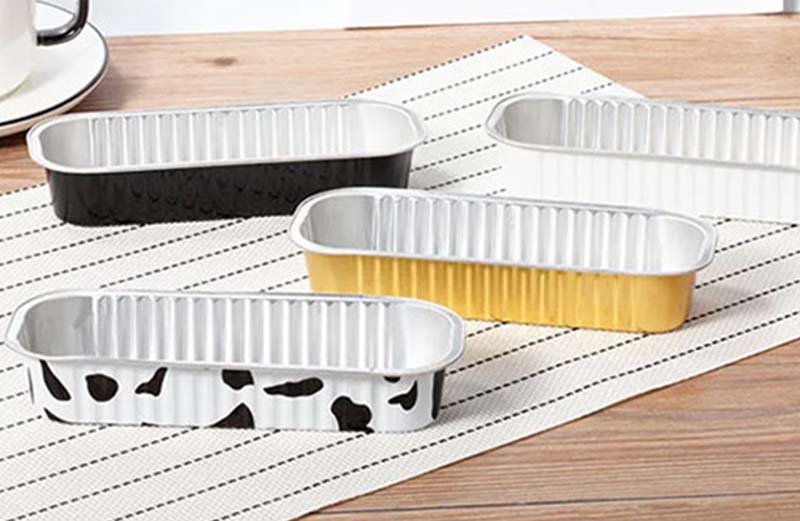
Smooth Wall Aluminium Containers feature a unique smooth inner wall design that combines aesthetic appeal with functionality. Available in round, rectangular, and even heart shapes, these containers offer visual differentiation that supports brand identity across restaurant, catering, and home-use environments. This variety matters because different menu items and brand positions benefit from different presentation approaches. A premium bakery presenting delicate pastries may choose heart-shaped containers for Valentine’s promotions. A fast-casual salad chain may opt for rectangular smooth-wall containers that nest neatly and present cleanly.
Standardization also plays a critical role in brand consistency across multiple locations. As noted in industry observations about food franchise packaging, aluminum containers are manufactured to precise dimensions, enabling consistent portion sizes, efficient stacking for delivery, and uniform presentation across outlets — all of which “builds customer trust and reinforces brand identity”. When every outlet uses the same quality packaging, customers receive a consistent brand experience regardless of location. That consistency is the foundation of scalable brand loyalty. Explore how different container shapes and finishes can support your brand identity.
Food Safety as a Competitive Advantage: Why Protection Against Contamination Directly Impacts Sales
Food safety is not merely about compliance — it is a direct driver of customer retention. In the food delivery industry, packaging serves as the barrier between prepared food and external contaminants. Customers expect that barrier to be reliable.
Aluminum foil containers provide a protective barrier against moisture, oxygen, and contaminants, ensuring the preservation and freshness of stored food. For Smooth Wall Aluminium Containers, this protection is enhanced by the material’s inherent resistance to water, oxygen, and light, which effectively preserves the freshness and quality of stored food items. Additionally, these containers accommodate both hot and cold foods and can be used in ovens, microwaves, and freezers, making them suitable for diverse menu types.
From a safety compliance standpoint, food-contact aluminum foil must meet established regulatory standards. According to industry technical specifications, FDA 21 CFR 175.300 (USA) limits aluminum migration to less than 1 mg per kg of food, while EU Regulation 10/2011 sets a specific migration limit (SML) of 5 mg Al per kg of food. These standards ensure that properly manufactured Smooth Wall Aluminium Containers are safe for direct food contact across international markets.
When customers associate your brand with clean, secure, and professional food handling, they choose you over competitors whose packaging suggests otherwise. This association translates into a competitive advantage that no amount of discounting can replicate. (See how packaging performance requirements vary across different food service applications)
Your Decision Framework: Four Questions to Ask Before Choosing Food Packaging
When evaluating packaging options, use this structured approach:
| Decision Factor | Ask This Question | Why It Matters |
|---|---|---|
| Sustainability alignment | Does this packaging support my brand’s environmental claims and meet current regulations? | Mismatched claims erode trust; non-compliant packaging creates legal risk. |
| Thermal performance | Will this container keep food at the right temperature across my typical delivery radius? | Temperature loss directly reduces customer satisfaction and repeat rates. |
| Presentation consistency | Does this container present food cleanly and reinforce my brand identity? | First impressions shape perceived quality before the first bite. |
| Safety compliance | Is this material certified for direct food contact under relevant regional standards? | Safety failures create immediate reputational and financial damage. |
Application Scenarios — When Do These Factors Matter Most?
High-volume delivery restaurant with 30+ minute average delivery times
In this scenario, thermal performance becomes the dominant decision factor. Customers ordering from restaurants more than 3–5 kilometers away have experienced temperature-related quality issues in the past. Smooth Wall containers’ heat retention properties directly address this pain point. The secondary consideration is safety — containers must remain rigid and leak-proof throughout extended transport.
Premium catering business targeting corporate clients
Here, brand presentation takes priority. Corporate clients judge service quality based on every detail, including how food is presented upon arrival. The smooth, clean aesthetic of Smooth Wall containers supports a premium brand image. The availability of custom shapes and sizes allows branding elements to be incorporated into the packaging experience.
Prepared meals manufacturer selling through retail channels
For this business model, sustainability and safety compliance are equally critical. Retail customers increasingly check packaging materials before purchasing. Aluminum’s recyclability becomes a purchase consideration. Additionally, bulk manufacturing requires consistent container dimensions to maintain production line efficiency — a requirement that smooth-wall containers meet through standardized manufacturing tolerances.
Next step: From guidelines to selection
Once you have clarified these key decision factors — sustainability alignment, thermal performance requirements, brand presentation priorities, and food safety compliance needs — comparing the specific specifications of available options becomes the next logical step. You can review ZONGBOU‘s product series for high-volume food delivery applications or explore custom shape options for brand differentiation projects. The right choice depends on your specific operational context, but the framework above provides the foundation for making that choice with confidence.
Related Reading
-
Smooth Wall vs. Wrinkle Wall Aluminium Containers: A Practical Comparison for Food Businesses
-
How to Evaluate Aluminium Foil Container Manufacturing Partners for Quality Consistency
-
Regulatory Guide: Food-Grade Packaging Standards Across North America, Europe, and Asia
-
The Economics of Switching from Plastic to Aluminium Food Containers
This article is part of ZONGBOU’s technical content library. No direct sales or pricing information is included. All technical discussions aim to help you make informed purchasing decisions.